


Very few shows manage to feel instantly recognizable while also sparking endless debate about what they are trying to be. Wednesday does exactly that. It arrived with a built-in legacy, a massive platform, and a clear visual identity, yet reactions ranged from obsessive love to cautious skepticism. Some viewers connected immediately to its dark humor and stylized mystery. Others felt it struggled to balance tone, genre, and character depth.
What makes Wednesday worth examining is not whether it is perfect, but why it works as well as it does for so many people. Beneath the murder mystery and gothic trappings sits a story about emotional repression, identity, and the quiet fear of needing other people. That emotional core explains both the show’s popularity and the friction some viewers feel while watching it.

What the Show Is Really About Beyond the Plot
At its heart, Wednesday is not a mystery about monsters or murders. It is a character study about emotional isolation. The supernatural elements and detective framework exist mainly to pressure Wednesday Addams into confronting the one thing she actively resists: connection.
Wednesday’s defining trait is not her intelligence or her darkness. It is her refusal to be emotionally vulnerable. She believes that detachment equals strength. The show repeatedly challenges that belief by placing her in a world where isolation becomes a liability rather than a shield.
Nevermore Academy is not simply a spooky school. It functions as a social ecosystem that demands participation. Every clue, relationship, and consequence pushes Wednesday toward collaboration, empathy, or at least acknowledgment of others as more than tools. The mystery works because it forces her to engage with people she would rather dismiss.
This makes the show less about solving crimes and more about testing whether emotional distance can truly protect someone from pain. The answer, gradually and imperfectly, is no.
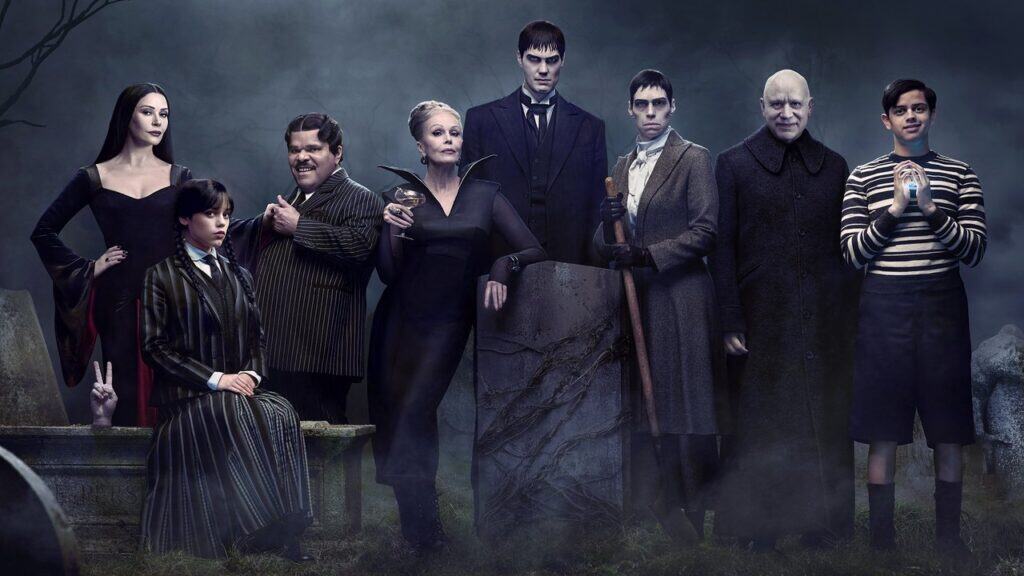
Character Design and Arcs
Wednesday Addams: Control as Armor
Wednesday is written as someone who believes control is safety. She controls her emotions, her body language, her tone, and even her relationships. Her refusal to smile, cry, or soften is not just aesthetic. It is a survival strategy.
Her arc does not involve becoming cheerful or warm. It involves recognizing that her self-imposed isolation causes damage, both to herself and to others. Importantly, the show never fully resolves this tension. Wednesday does not complete a transformation into a more conventional hero. Instead, she learns that emotional detachment has consequences she cannot always outthink.
That restraint makes her arc feel honest. Growth comes in moments of discomfort rather than sweeping change.
Enid Sinclair: Emotional Honesty as Strength
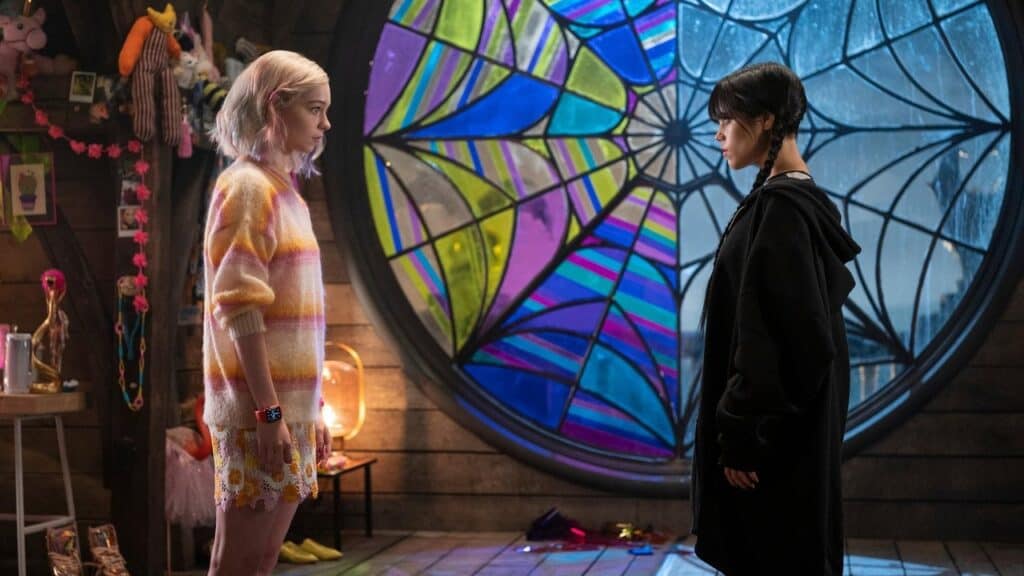
Enid serves as Wednesday’s thematic opposite. She is expressive, colorful, and emotionally open in ways that initially feel superficial to Wednesday. Over time, Enid becomes one of the show’s strongest emotional anchors.
What makes Enid effective is that her vulnerability is not portrayed as weakness. She struggles with belonging, expectations, and self-worth, yet her willingness to feel deeply gives her resilience. Her arc quietly reframes emotional openness as a form of courage, directly challenging Wednesday’s worldview.
Their relationship works because neither character is fully right or wrong. The tension between them creates growth on both sides.
Tyler Galpin: The Cost of Suppression
Tyler’s storyline explores repression from a different angle. Where Wednesday suppresses emotion intentionally, Tyler internalizes expectations and identity conflicts until they fracture. His arc becomes a darker mirror to Wednesday’s own emotional rigidity.
What resonates here is not the twist itself but the implication. Suppressed identity does not disappear. It mutates. Tyler’s journey reinforces one of the show’s recurring ideas: denial and silence eventually surface in destructive ways.
Morticia Addams: Legacy and Pressure
Morticia represents the weight of inherited identity. She embodies grace, confidence, and emotional balance, everything Wednesday resists. Their strained dynamic highlights the anxiety of becoming someone you fear you are already destined to be.
Rather than positioning Morticia as a villain, the show frames her as a reminder that love can still feel suffocating when it carries expectations. Wednesday’s struggle is not to reject her mother but to define herself outside of that shadow.

Tone, Pacing, and Structural Choices
Wednesday walks a tonal tightrope. It blends gothic comedy, teen drama, supernatural mystery, and coming-of-age storytelling. At its best, this creates a textured viewing experience that feels playful and unsettling at the same time.
The pacing, however, is uneven. Early episodes move quickly, relying on mystery hooks and visual flair to pull viewers in. Mid-season, the show occasionally slows as it juggles multiple subplots, romances, and red herrings. For some viewers, this creates momentum fatigue. For others, it deepens immersion.
Structurally, the episodic mysteries work less as standalone stories and more as emotional checkpoints. Each episode introduces obstacles that test Wednesday’s autonomy. The show is less interested in procedural logic than in how each development disrupts her emotional equilibrium.
This approach prioritizes character over mechanics, which explains why some mystery fans feel unsatisfied while character-driven viewers remain engaged.

What the Show Gets Right
Visual Storytelling and Identity
The show’s visual language is remarkably consistent. Costumes, color palettes, and framing reinforce character psychology. Wednesday’s stark wardrobe contrasts with Enid’s bright aesthetic, visually reinforcing their emotional differences without dialogue.
Nevermore Academy itself feels lived-in rather than decorative. The setting supports mood without overwhelming it, creating a space where the supernatural feels normalized rather than sensationalized.
Humor That Reveals Character
The humor in Wednesday works because it is rooted in character perspective. Wednesday’s deadpan delivery is not used merely for punchlines. It reinforces her emotional distance and worldview.
Jokes often function as defense mechanisms. When Wednesday is uncomfortable, she deflects with wit. This makes the humor emotionally purposeful rather than ornamental.
A Lead Performance That Anchors Everything
The show succeeds largely because Wednesday feels internally consistent. Her stillness, expressions, and speech patterns communicate more than exposition ever could. Even when the plot wobbles, the character remains grounded.
This consistency allows viewers to project onto her without losing clarity about who she is.

Where the Show Struggles or Divides Viewers
Romance as Distraction
Romantic subplots generate some of the most divided reactions. For viewers invested in Wednesday’s emotional isolation, romance can feel like a shortcut rather than earned development. The show sometimes uses romantic tension to raise stakes instead of deepening character psychology.
When romance aligns with theme, it works. When it exists simply to complicate the mystery, it risks diluting focus.
Mystery Logic Versus Emotional Logic
The central mystery occasionally sacrifices coherence for surprise. Clues are sometimes less important than twists, which can frustrate viewers expecting tighter narrative logic.
However, this reflects the show’s priorities. Emotional logic consistently outweighs procedural accuracy. Whether that works depends entirely on viewer expectations.
Balancing Audience Age and Depth
Wednesday straddles a line between teen drama and darker gothic storytelling. Some tonal shifts feel abrupt, particularly when emotional stakes clash with lighter school antics. This balancing act keeps the show accessible but occasionally limits its thematic depth.
Why the Show Connected With Audiences
Timing played a significant role in Wednesday’s success. It arrived during a cultural moment defined by identity exploration, emotional burnout, and renewed interest in gothic aesthetics.
Wednesday’s refusal to perform emotional accessibility resonated with viewers tired of constant positivity. Her guarded nature reflects a generation negotiating vulnerability on its own terms.
Social media amplified this connection. The show’s visuals, music, and character moments translated easily into short-form content, fueling conversation and reinterpretation.
For viewers who wanted to explore similar vibes, posts like Shows Like Wednesday, A Guide to Dark, Stylish Mystery TV helped contextualize the show within a broader genre movement without diminishing its individuality.

How It Compares to Similar Shows Without Becoming One of Them
Wednesday shares DNA with supernatural school stories, mystery-driven teen dramas, and gothic coming-of-age tales. What sets it apart is its emotional restraint. Many similar shows rely on heightened melodrama. Wednesday leans into minimalism.
Its protagonist does not narrate her feelings. She resists them. This creates a colder tone that feels intentional rather than distant.
Viewers drawn to strong, unconventional female leads often notice how Wednesday differs from more expressive heroines. That contrast helps explain why comparisons frequently arise in discussions like Shows Like Wednesday With Strong Female Leads, even though Wednesday herself resists traditional leadership archetypes.
The show also taps into the enduring appeal of supernatural academies, yet it uses that setting less as wish fulfillment and more as pressure cooker. Articles such as Shows Like Wednesday With Supernatural Schools or Academies highlight how the setting functions thematically rather than just aesthetically.

Long-Term Impact and Rewatch Value
Wednesday is likely to age better emotionally than narratively. On rewatch, the mystery loses urgency, but character dynamics gain clarity. Small gestures, pauses, and choices become more noticeable once the destination is known.
The show’s rewatch value lies in observing how consistently it reinforces its themes. Wednesday’s resistance to connection appears in dozens of subtle moments that feel intentional rather than incidental.
Because episodes are tightly structured and visually distinct, the series also benefits from binge-friendly pacing. This accessibility explains why many viewers revisit it casually, as reflected in interest around content like Short Shows Like Wednesday You Can Binge Quickly.

Frequently Asked Questions
Is Wednesday more of a mystery show or a character-driven series?
Wednesday uses a mystery framework, but its primary focus is character. The investigation mainly serves to pressure the lead emotionally rather than function as a tightly plotted procedural.
Who is Wednesday meant to appeal to as a viewer?
The show tends to connect most strongly with viewers who enjoy stylized tone, strong central characters, and emotional restraint. It may feel less satisfying to audiences looking for fast-paced mystery logic or heavy plot twists.
Does Wednesday require a lot of emotional investment to enjoy?
Not necessarily, but emotional engagement enhances the experience. Much of the payoff comes from subtle character shifts and relationship dynamics rather than overt storytelling.
How does the tone of Wednesday compare to other dark mystery series?
Wednesday balances gothic visuals with dry humor and minimal emotional expression. Compared to similar shows, it leans more controlled and ironic rather than dramatic or intense.
Is Wednesday appropriate for casual binge-watching?
Yes. Episodes are structured clearly and maintain a consistent tone, making the show easy to watch in short or extended sessions without losing coherence.
Does Wednesday rely heavily on Addams Family nostalgia?
While the legacy adds context, the series stands largely on its own. Familiar elements support the character but are not required to understand or appreciate the story.