

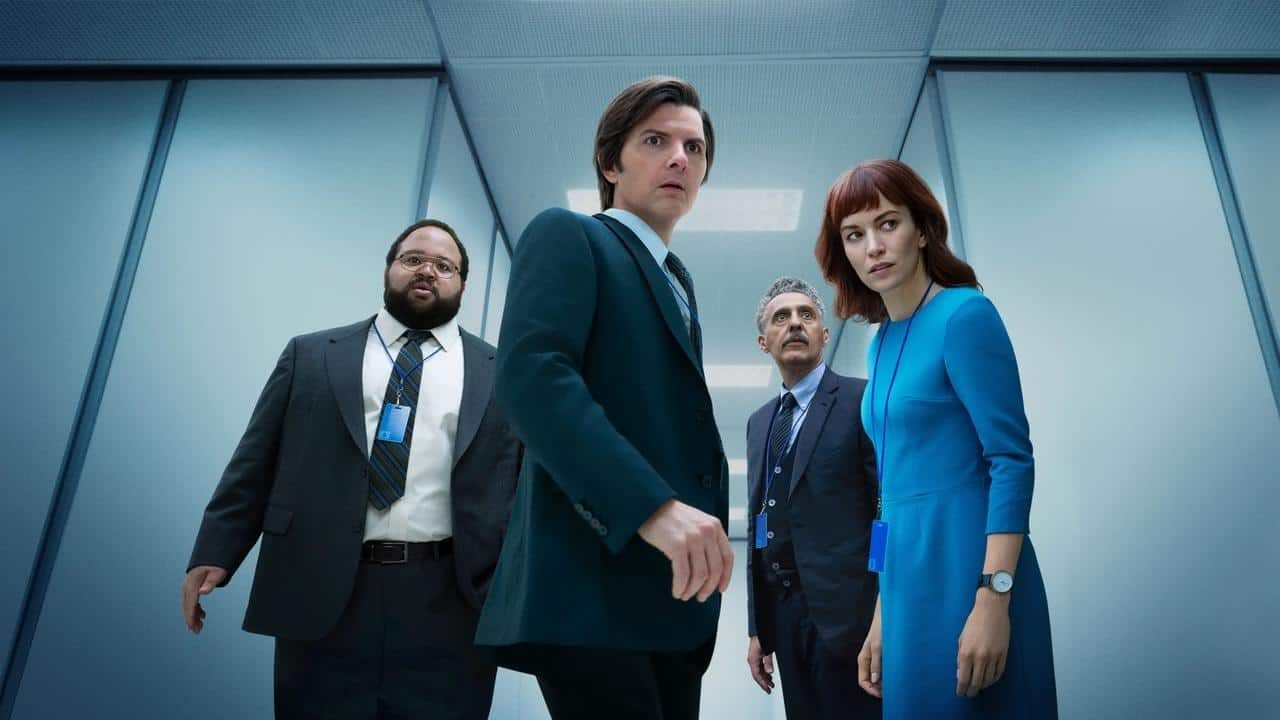
If you loved the feeling of work swallowing identity, routines, and choices, this list is for you. These are Shows Like Severance Where Your Job Controls Your Life, picked for tight pacing, pressure-cooker scenes, and characters who start acting different the moment the “work self” clicks on. People want the same locked-in momentum, the same uneasy smile that turns into panic, and the same slow-burn questions that keep you clicking Next Episode.
3 Shows to Watch
1. Mr. Robot
The first thing Mr. Robot nails is the feeling that the job is not just a job, it is an invisible hand on the back of your neck. Every episode moves like a late-night elevator ride, quiet at first, then suddenly you realize you are trapped in a system that already predicted your next move. The pacing is sharp and intentional, it knows when to sprint and when to hold a stare for one extra beat until it becomes uncomfortable. That rhythm matters for this vibe, because “work controls your life” only lands when the show makes you feel time being managed, minutes being stolen, and choices being shaped before they even reach your mouth.
Character chemistry is the hook that keeps the pressure personal. The connections in Mr. Robot are not warm and easy, they are messy, tense, and magnetic, like two magnets fighting between snapping together and smashing apart. Conversations feel like negotiations with hidden clauses. Even when two characters agree, you still feel the cost, like they just signed something they did not fully read. That is the same kind of chemistry you chase when you want a workplace story where the real conflict is inside the person, not just in the building.
Structurally, Mr. Robot is built like a puzzle box with a timer. Episodes give you answers, but they also change the question, which keeps your attention locked without needing loud cliffhangers. You will get scenes that feel like walking through fluorescent hallways, the kind where you can hear your own breathing, then it cuts to a burst of motion that makes your pulse jump.
Perfect For: Viewers who want tight, tense episodes where identity feels hacked by routine and power.
2. Counterpart
Counterpart is one of the cleanest examples of workplace control as a lifestyle, because it treats the job like a doorway you walk through and do not come back the same. The pacing is patient but never sleepy. It builds tension the way fog builds on a streetlight, gradually, quietly, then suddenly you realize the light barely reaches the ground. That slow pressure is what makes the “job controls your life” vibe hit hard. You are not watching chaos, you are watching a system that stays calm while it rearranges people.
The character chemistry is where Counterpart gets addictive. You do not just have relationships, you have relationships under surveillance. Trust is a scarce resource, traded like currency, and every bond feels like it could be audited. When two characters share a moment of honesty, it lands like a secret passed under a table. The show thrives on subtle reactions, the flicker of fear behind professionalism, the forced smile that says, “I am fine,” while the eyes say, “I am not safe.” Those micro-moments create the emotional texture that makes workplace control feel real, not theoretical.
Structurally, Counterpart feels like a series of doors and mirrors. Each episode is organized, deliberate, and full of parallel choices that force you to compare who someone is at work versus who they could have been. That structure gives you long-term payoff, because the show keeps setting up small decisions that later explode into consequences. It is not random, it is engineered, and that engineering echoes the exact vibe you are chasing.
Perfect For: Viewers who want slow-burn tension, sharp character contrast, and payoff that builds from small choices.
3. Devs
Devs is the show you pick when you want workplace control to feel like a temple you were not invited into. The pacing is hypnotic, like stepping onto a moving walkway and realizing it is speeding up. It uses stillness as a weapon, long quiet stretches where the screen feels too calm, then one sentence lands and your brain starts racing. That rhythm creates a specific viewing experience, the sense that the job is not just demanding time, it is rewriting reality around the characters.
Character chemistry in Devs is not about banter, it is about gravity. People pull on each other in ways they do not fully understand. Conversations feel weighted, like every word is being recorded, measured, and compared against a model. You can sense the imbalance in relationships, who has access, who has clearance, who is allowed to ask questions, and who is expected to stay quiet. That dynamic is perfect for this list, because the whole point is that the workplace decides what you are allowed to know, and that changes how you relate to everyone else.
Structurally, Devs is clean and intentional. Each episode drops you into a controlled environment, then makes you watch how control spreads. It is not about constant twists, it is about inevitability. The show sets up patterns early and then tightens them, like a net being pulled in. That creates emotional payoff that feels both satisfying and unsettling.
Perfect For: Viewers who want a sleek, slow, tense experience where the workplace feels like a system that predicts people.
Why These Shows Work
Severance works because it treats work as a switch that changes the viewing experience, not just the story. The structure is built around controlled information, tight episodic beats, and lingering questions that pay off over time. You get forward motion without constant action, because tension comes from what characters do not know, what they cannot say, and what they are trained to accept.
Character dynamics are the engine, especially relationships that feel friendly on the surface but unstable underneath, because everyone is operating under rules that reshape identity. Long-term engagement comes from the same loop viewers love in bingeable thrill rides, small reveals, sharper suspicions, and emotional moments that land like a trapdoor opening under a smile.
To match that experience, the picks above were filtered using narrow, repeatable criteria.
First, each show needed momentum that is deliberate, episodes that move with purpose and end with a reason to keep going.
Second, the relationships had to carry tension, chemistry that feels pressured by hierarchy, secrets, or access.
Third, the structure needed long-term payoff, where early choices and small details matter later, creating the sensation that the system is always one step ahead.
Finally, each show had to make the workplace feel like a controlling force that shapes identity and personal life, not just a backdrop for scenes.
- Mr. Robot matches the formula through pace control and character-driven tension, it uses sharp episode construction to keep the pressure personal and escalating.
- Counterpart fits through its structured layering of trust and surveillance, it turns relationships into high-stakes negotiations and rewards attention with delayed payoff.
- Devs belongs because it builds inevitability into the viewing rhythm, it makes control feel ambient and constant, then delivers emotional turns that hit because they feel engineered.
3 Shows to Skip
1. The Office
People expect The Office to fit because it is the most famous workplace show in modern TV, and the job is absolutely central to everyone’s day. You see routines, inside jokes, awkward power dynamics, and the way the office can become your whole social world. On paper, it sounds like it should match the “job controls your life” idea, because characters are constantly trapped together under one boss, one building, one set of petty rules.
But the experience is fundamentally different from what viewers are trying to replicate here. The Office is designed to be a comfort loop. Episodes prioritize comedic beats and familiar rhythms over escalating pressure. The pacing is intentionally relaxed, because the point is to hang out with the same personalities and watch small disasters resolve into jokes. Even when there is conflict, it is built to release tension quickly, not to tighten it. That means it does not create the same locked-in momentum where you feel the system closing around someone.
Character chemistry is a major strength, but it is chemistry that softens the workplace, not chemistry that makes it dangerous. Relationships become found-family energy, even when people annoy each other. The workplace may be annoying, but it is not controlling identity in the way this list is targeting. The structure also leans episodic with light continuity. You can drop into random episodes and still have a good time, which is the opposite of that “I have to keep watching because the questions are stacking” feeling.
Perfect For: Viewers who want a warm, joke-forward workplace hangout with strong character banter.
If you want lighter workplace laughs instead of pressure-driven control, check out Shows Like The Office With Workplace Humor
2. Upload
Upload looks like it should match because it puts people inside a system with rules, tiers, and corporate control. There is a company vibe, there are policies, and there is a constant reminder that someone owns the platform. Viewers who want workplace control often gravitate toward shows that feature contracts, permissions, and invisible strings, so Upload can feel like it belongs in the same conversation at first glance.
Where it falls short for this specific list is the viewing rhythm and emotional texture. Upload is built to be breezy, fast, and playful. The pacing aims for light momentum and quick laughs, not sustained tension that keeps tightening. When the show introduces control, it often turns it into a setup for humor, romance beats, or a clever twist that resets the mood. That can be super fun, but it changes the experience. You do not get that steady sense of dread, the feeling that every scene is one step deeper into a trap.
Character chemistry is also tuned differently. Relationships are designed to be charming and watchable, with emotional beats that soothe more than sting. Even when characters face limits, the show tends to keep the vibe approachable. For the “job controls your life” modifier, the strongest matches make you feel like the system is shaping identity, speech, and choices. Upload shows control, but it often treats it as scenery for jokes and relationship drama, not as a constant force that rewires who someone is.
Perfect For: Viewers who want a playful, easy binge where corporate rules are more comedic than crushing.
3. Mythic Quest
Mythic Quest is a workplace show that a lot of people recommend whenever someone asks for anything office-adjacent, especially if they want tech culture, egos, and creative clashes. It makes sense why it gets suggested, it lives inside a job, the job shapes friendships, and the office energy absolutely influences everyone’s decisions. If you are searching broadly for “work life takes over,” you might see it and think, yep, that is the one.
For this specific vibe, though, Mythic Quest aims at a different target. The pacing is built around comedic escalation, character quirks, and emotional beats that arrive as heartfelt pauses, then return to humor. That pattern is great for a character comedy, but it does not create the same controlled, locked-in tension that defines the workplace-control feeling you are chasing. The job creates problems, but the show often frames them as ridiculous, solvable, or ultimately human, rather than as a system that reshapes identity.
The character chemistry is strong, but it is chemistry that feels like a chaotic friend group. People clash, then bond, then clash again, and the structure supports that cycle. In the strongest matches, chemistry comes from pressure, secrecy, and constraint, where relationships are shaped by what the workplace allows. Mythic Quest is more about personalities colliding and evolving, not about a workplace that polices the self.
Perfect For: Viewers who like workplace comedies with sharp character voices and occasional emotional gut-punches.
If the tech setting and creative chaos are what you enjoy most, this list fits better Tech Comedy Shows Like Mythic Quest
Why These Don’t Work
These shows are not bad at all, they just do not match the specific viewing filter this list is built around.
- The Office: Focuses on comfort pacing and quick release of tension, so the workplace feels familiar rather than controlling.
- Upload: Uses system rules as a springboard for humor and romance energy. This softens the sense of being managed minute by minute.
- Mythic Quest: Centers on personality clashes and creative chaos. Not the tight, engineered pressure that makes workplace control feel like identity control.
Severance works best when structure, relationships, and episode momentum make you feel the system tightening over time. These three shows deliver a different rhythm and a different kind of payoff.
10 Quick Picks
-
Black Mirror: Standalone stories that make systems feel personal, control shows up as rules you cannot escape.
-
Homecoming: Tight episodes, controlled information, and a workplace that keeps rewriting what characters think is true.
-
Maniac: Identity gets shuffled under institutional routines, with emotional payoff that hits when masks crack.
-
Westworld: Long-term payoff built on hidden rules, characters fight roles assigned by a larger machine.
-
Dollhouse: Work becomes identity assignment, episodic structure builds into bigger consequences.
-
Russian Doll: A repeating structure that feels like a system testing you, choices start to feel programmed.
-
Orphan Black: Relationships under surveillance, secrets stack fast, identity becomes a battleground.
-
Dark: Structured reveals and long payoff, characters feel trapped in rules bigger than their lives.
-
The Leftovers: Identity shifts under pressure, relationships fracture and reform with controlled pacing.
-
Utopia: Momentum-heavy episodes, paranoia and control mechanics keep trust unstable.
Frequently Asked Questions
What shows feel like your workplace owns you
If you want that feeling, pick shows where the job sets the rules for identity, access, and relationships. Look for tight episode structure, controlled information, and characters who act different depending on who is watching. Mr. Robot, Counterpart, and Devs all deliver that managed-life pressure without relying on constant action.
What should i watch after severance if i want the same tension
Prioritize shows with deliberate pacing and long-term payoff, where every episode adds a new layer instead of resetting. You want tension that comes from systems, secrets, and relationships under constraint. Mr. Robot is the fastest hook, Counterpart is the cleanest slow build, Devs is the most hypnotic.
Do these shows have the same bingeability as severance
Yes, but for different reasons. Mr. Robot pulls you with momentum and escalating stakes. Counterpart keeps you watching because small choices echo later. Devs makes you binge because it builds a constant sense of inevitability.
I want workplace control without too much action, what fits best
Go for slow tension and structured reveals. Counterpart is the best match for steady pressure and quiet intensity. Devs also fits, it uses stillness and atmosphere to keep you locked in. These shows keep momentum through questions and character reactions, not through nonstop fights.
Which one is closest in tone, not just the premise
If you mean the uneasy, controlled-feeling tone, Devs is the closest. It makes the workplace feel like a contained world with rules you can sense even when no one explains them. Counterpart is close too, because it keeps relationships tense and measured, like everything is being evaluated.
Do any of these focus on relationships as much as the system
Yes. Mr. Robot makes relationships feel like the real battlefield, trust and connection get shaped by pressure. Counterpart turns relationships into a slow negotiation where every bond has risk. Devs is more distant emotionally, but relationships still matter because access and secrecy warp them.
I liked the mystery of rules and policies, what should i pick
Choose the show that treats rules as a living force. Counterpart is excellent for policy-driven tension and long payoff. Devs is strong if you want rules that feel philosophical and inevitable. Mr. Robot is best if you want rules that feel like manipulation through everyday systems.
Are there any shows like this that are easier to follow
Mr. Robot is the easiest to jump into because it hooks quickly and keeps momentum obvious. Counterpart stays clear because its structure is disciplined and consistent. Devs can feel more abstract, so if you want the smoothest watch, start with Mr. Robot or Counterpart.