
Who Emily In Paris Is For

Emily smiles out the car window while riding across a bridge in Paris with the Eiffel Tower glowing in the background at sunset

Table of Contents

Few modern streaming hits have produced reactions as divided as Emily In Paris. Some viewers treat it like a comfort ritual. Others find it bafflingly superficial. The tension often comes from expectations colliding with execution. People approach it anticipating one kind of story and receive something else entirely.

The real decision is not whether the show is good or bad. It is whether the emotional experience it offers aligns with the way you prefer to spend your screen time.

Emily sits at a modern dining table in a blue room smiling during a professional dinner meeting surrounded by glassware and decor

Why This Show Splits Audiences So Clearly

Emily In Paris thrives for a specific audience and frustrates another just as specific. That divide exists because the series operates on a very clear creative philosophy. It is not trying to be socially realistic, politically nuanced, or emotionally devastating. It is not interested in deconstructing its own premise.

Instead, it leans hard into fantasy, aesthetic pleasure, romantic complication, and heightened tone.

For viewers who want that exact combination, it feels indulgent and charming. For viewers who expect grounded realism or deeper cultural introspection, it can feel hollow. Understanding that divide is the key to knowing where you stand.

What Kind of Show Emily In Paris Actually Is

It Is A Romantic Fantasy Set In A Real City

Despite its contemporary setting, Emily In Paris functions more like a glossy fairy tale than a slice of life. Paris operates as a backdrop for mood, fashion, flirtation, and aspiration. It is stylized, curated, and intentionally heightened.

If you approach the show expecting documentary realism or sociological depth, you will likely feel misaligned. The series is interested in fantasy texture, not cultural examination.

It Prioritizes Vibes Over Consequences

The narrative engine is not high-stakes transformation. It is momentum built from romantic entanglements, career missteps, and social misunderstandings. Conflicts tend to resolve cleanly or pivot into new flirtations rather than spiral into heavy emotional fallout.

This is not a show built around long-term consequences. It is built around charm, tension, and forward movement.

It Is Structured Around Episodic Delight

Each episode offers aesthetic pleasures. Outfits. Scenic views. Cocktail-lit conversations. Professional mishaps that feel dramatic but rarely catastrophic.

Beneath the surface, the series is less about growth arcs and more about maintaining a specific tone. It wants you to enjoy the ride more than analyze the destination.

Misconceptions often arise when viewers expect layered psychological depth similar to prestige dramas. The show is not trying to operate in that lane.

The Viewing Experience Emily In Paris Creates

Fast, Light, And Glossy

The pacing is brisk. Storylines overlap and resolve quickly. Romantic tension cycles at a steady rhythm. The episodes rarely linger in discomfort for long.

That speed creates a feeling of breezy immersion. You can watch several episodes in a row without emotional fatigue.

Emotionally Effervescent Rather Than Heavy

The show avoids lingering melancholy. Even when characters experience rejection or professional setbacks, the tone rebounds quickly.

Spending time with Emily In Paris feels like stepping into a curated social feed. Bright. Stylish. Friction appears, then dissolves into the next possibility.

Designed For Casual Immersion

This is not a series that demands intense concentration. You can watch it after a long day without needing to track intricate plot threads.

The reward lies in atmosphere, chemistry, and visual pleasure. The show respects your attention span but does not require deep narrative decoding.

If you prefer layered symbolism or slow thematic build, that rhythm may feel shallow. If you want light escapism, the structure supports exactly that.

Who Emily In Paris Is For

Viewers Who Love Romantic Complication As Entertainment

Some audiences enjoy watching love triangles unfold not because they want realism, but because they enjoy tension and flirtation as narrative fuel.

If you are drawn to chemistry, charged glances, and relationship ambiguity more than relationship stability, the show offers consistent payoff. Romantic energy drives nearly every storyline.

It is less about finding a soulmate and more about sustaining emotional intrigue.

Viewers Who Watch Television For Aesthetic Pleasure

For some people, visual texture matters as much as plot. Wardrobe, architecture, and color palettes create emotional resonance.

If you value atmosphere and fashion as part of the storytelling experience, Emily In Paris delivers that consistently. The city becomes a mood board. The outfits become expressions of tone.

This is the kind of show that feels curated rather than raw.

Viewers Who Enjoy Escapist Career Fantasy

Emily’s professional life is heightened and glamorous. Meetings feel dramatic. Campaigns feel high stakes without being existential.

If you like workplace stories that lean into aspiration rather than corporate realism, this may resonate. The show offers a stylized version of ambition.

For viewers who are drawn to the fantasy of reinvention in a new city, that narrative frame can be satisfying.

Viewers Who Prefer Emotional Lightness Over Psychological Depth

Not every viewer wants moral complexity or internal unraveling. Some prefer stories that maintain buoyancy.

If you gravitate toward series that keep tone elevated and avoid heavy introspection, the show’s emotional palette may feel refreshing.

It does not ask you to confront discomfort. It asks you to enjoy charm.

Viewers Who Treat Television As Comfort Ritual

Some shows become routine rather than event. They are familiar spaces you return to.

If you like having a series that provides consistent mood and predictable energy, Emily In Paris can function as that steady companion. It offers familiarity in its cycles of romance and professional chaos.

For viewers who loved the rhythm of series like Sex and the City, you might appreciate how this show carries forward a similar tonal lineage, something explored in Romantic Comedies like Emily in Paris.

Emily sits ringside at a boxing gym in Paris talking to a shirtless boxer wearing gloves during a quiet training moment

Why These Viewers Tend To Connect With It

The creative choices of Emily In Paris reward audiences who prioritize sensation over scrutiny.

The writing favors sparkle over subtext. The pacing favors forward motion over reflection. The emotional stakes remain accessible rather than overwhelming.

For viewers aligned with those preferences, the show feels intentional rather than shallow. The lightness becomes the point. The fantasy becomes the appeal.

It delivers what it promises. And for the right viewer, consistency feels like respect rather than limitation.

Who Emily In Paris Probably Is Not For

Viewers Seeking Cultural Nuance

Some audiences approach the series expecting thoughtful engagement with cross-cultural dynamics. When the portrayal feels simplified, it can create frustration.

If you are drawn to nuanced exploration of identity, assimilation, or social commentary, you may find the show’s approach too surface-level.

The mismatch stems from expectation rather than incompetence. The series was not designed as cultural critique.

Viewers Who Need Character Transformation

If you prefer stories built around significant internal evolution, you might feel stalled.

While characters experience situational change, deep psychological shifts are not the central focus. The emotional arcs reset frequently to sustain tone.

For viewers who want profound growth, that circular structure can feel repetitive.

Viewers Drawn To High Narrative Stakes

Some people watch television for tension rooted in irreversible consequences.

In Emily In Paris, most conflicts resolve without lasting fallout. Careers wobble but rarely collapse. Relationships fracture but reform.

If you need sustained risk or moral weight to stay engaged, the show’s resilience may feel unserious.

Viewers Who Prefer Realistic Workplace Drama

The professional world here operates with heightened theatricality. Campaigns move quickly. Opportunities appear conveniently.

If you value procedural detail or corporate authenticity, the narrative shortcuts may feel distracting.

Shows that lean into grounded career tension are examined in [this breakdown of similar workplace dramas], which may align more closely with that taste.

Viewers Who Resist Stylized Romance

The romantic arcs rely on coincidence, longing glances, and heightened charm.

If you are skeptical of romantic fantasy or impatient with cyclical love triangles, the repetition may grate.

The series does not attempt to subvert those conventions. It embraces them.

Why These Viewers Often Bounce Off It

The friction usually arises from tonal mismatch.

When viewers expect emotional gravity, the buoyancy feels dismissive. When they expect realism, the stylization feels artificial. When they expect transformation, the narrative stasis feels stagnant.

None of those reactions are wrong. They reflect different values about what television should provide.

The show’s design is consistent. But consistency only feels satisfying when it aligns with personal preference.

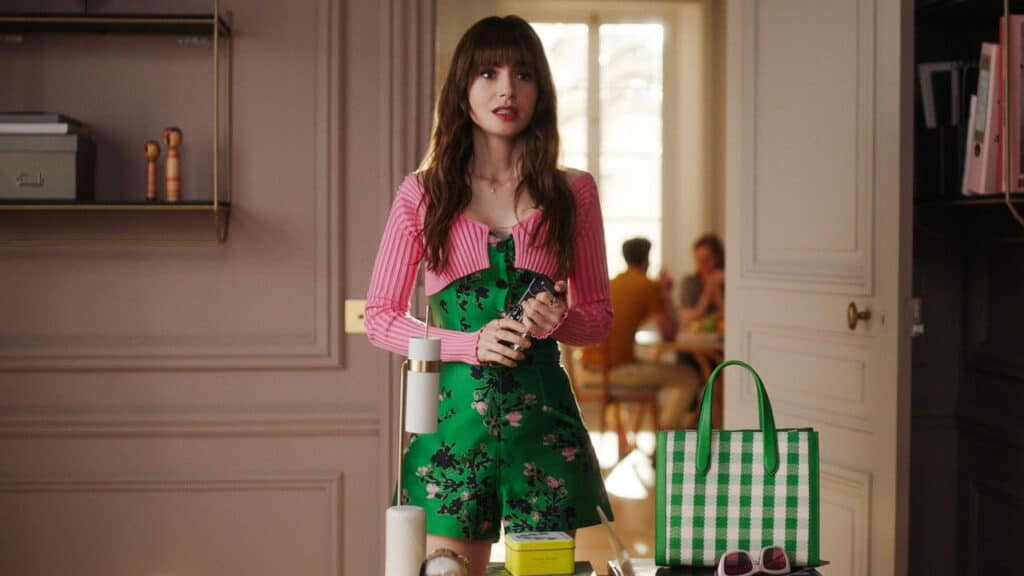
Emily stands in her Paris apartment wearing a green floral romper and pink cardigan while holding her phone, surrounded by stylish decor and accessories

Contextual Comparisons That Clarify Expectations

If you respond well to the aspirational sheen and romantic entanglements of Sex and the City, you may find familiar pleasure here. The tonal DNA overlaps in its embrace of style and romantic momentum.

If you prefer the sharper satire and generational tension of Younger, you might notice that Emily In Paris softens its edges by comparison.

And if you gravitate toward emotionally intricate dramas like The Marvelous Mrs. Maisel, you may find that while both shows value aesthetic detail, Emily In Paris operates with lighter thematic ambition.

These comparisons are not about ranking quality. They are about clarifying emotional texture.

So, Who Is Emily In Paris Really For?

It is for viewers who value escapism over realism.

It is for people who enjoy romantic tension as ongoing spectacle rather than resolution.

It is for audiences who find comfort in glossy repetition and curated fantasy.

And it is not for viewers who need grounded cultural exploration, irreversible stakes, or layered introspection to feel invested.

The conversation around the show often centers on quality. But quality is subjective. Alignment is clearer.

When your expectations match the show’s priorities, the experience feels satisfying. When they clash, disengagement feels inevitable. Both responses are valid.

Emily In Paris exists in a very specific creative lane. It does not pretend to be heavier than it is. It does not apologize for its sheen.

If you are looking for a series that feels like aesthetic escapism with romantic momentum and low emotional burden, it may offer exactly what you want.

If you are looking for depth, realism, or transformation, it may leave you restless.

Whether it fits depends entirely on what you hope to feel when you press play.

Share this post:

Not sure what to watch next?

Get 5 great shows to watch every month. One email. Zero spam.

Leave a Reply

Your email address will not be published. Required fields are marked *

About The Author

Zach is a lifelong TV obsessive and lead curator at SwipenPop. With over 10,000 hours of screen time analyzed, Zach specializes in identifying the “vibes” that make or break a show. From dark academia thrillers to high-fantasy epics, his mission is to help you spend less time scrolling through Netflix menus and more time watching your next favorite obsession. When he isn’t deep-diving into the latest streaming releases, Zach is rewatching The Office.
More

Dexter Characters Explained (Who They Are and Why They Matter)

Dexter showing his good and bad side from the show Dexter
If you are trying to remember who’s who in Dexter, this guide explains the main characters, what they do in the story, and why they matter. The main characters in Dexter are Dexter Morgan, Debra...

Breaking Bad Characters Explained (Who They Are and Why They Matter)

Jesse and Walter White from Breaking Bad.
If you are trying to remember who is who in the Albuquerque underworld, you are in the right place. Breaking Bad is not just a show about chemistry. It is a masterclass in how specific...

Dutton Ranch: Release Date, Cast, and Everything We Know About the Yellowstone Spinoff

A dark, cinematic horizontal cast photo of Cole Hauser as Rip Wheeler in a cowboy hat and Kelly Reilly as Beth Dutton. They are looking directly forward, emerging from a shadow with floating fire sparks and embers, representing the high stakes of 'Dutton Ranch'.
If you’re looking for the exact Dutton Ranch release date, cast updates, and where to watch, here’s everything confirmed so far. Dutton Ranch follows Beth and Rip as they start over on a new ranch...

Is The Devil Wears Prada 2 Better Than the Original?

Wide cinematic banner for The Devil Wears Prada 2 showing Meryl Streep in a red gown standing with Anne Hathaway, Emily Blunt, and Stanley Tucci.
Twenty years is a long time to stay in style. Fans have spent two decades wondering if a follow up to the 2006 classic would be a "groundbreaking" success or a total fashion disaster. The...

7 Best Shows Like Malcolm in the Middle for Fans of Family Chaos

A group photo of the entire Wilkerson family, including Hal, Lois, Malcolm, and his brothers, standing outdoors next to a small trailer.
You aren’t looking for a generic, polished sitcom where every problem is solved with a group hug. You want the unhinged energy, the constant yelling, the kids doing something incredibly dumb, and parents who are...

7 Relatable Shows Like The Middle That Actually Capture Real Family Life

An official promotional poster for ABC's The Middle. In a deliberate twist on a normal cast shot, the five members of the Heck family (Frankie, Brick, Sue, Axl, and Mike) pose on an old, dilapidated, frayed brown couch sitting in the middle of a sparse field of tall corn stalks and wild grass. They are wearing dated, dusty, 1930s-style blue-collar and farming clothes. The family looks directly at the camera with serious, unglamorous, and almost judgmental expressions, capturing the show’s authentic, struggling small-town vibe.
If you are chasing that exact mix of chaos, warmth, and painfully accurate middle-class life that The Middle nailed, most "family sitcom" lists will let you down. You do not want glossy families living in...

Young Sherlock Review: Why Guy Ritchie’s Series Is a Must-Watch

A group photo of the Young Sherlock cast members standing in front of an ancient stone archway leading to Oxford-style buildings. The cast features several recognizable actors, including Hero Fiennes Tiffin as Young Sherlock and Colin Firth, all dressed in 19th-century attire.
I went into Young Sherlock with a little suspicion. Sherlock Holmes origin stories can feel like a trick we have seen before: introduce the genius, hint at Moriarty, and show us how the legend begins....

The Best Cozy Mystery Shows Like Only Murders in the Building

Three main characters seated together in a tense moment from a cozy mystery series, capturing the investigative tone of cozy mystery shows like Only Murders in the Building.
This list is for viewers who want mysteries that feel light, character driven, and easy to keep watching, and it is a straight recommendation list built to save you time. If you are searching for...

The Major Difference Between Only Murders in the Building and Based on a True Story

Split image comparing Only Murders in the Building with Based on a True Story, two mystery comedy shows about murder, crime, and amateur investigations.
If you are a fan of true crime podcasts, you know the obsession is real. This cultural phenomenon has birthed a new subgenre of television: the true crime parody. Two heavyweights currently dominate this space:...

13 Best Survival Thrillers to Watch Next If You Love Yellowjackets (Ranked by Vibe)

Group of women performing a ritual around a fire in a dark forest, capturing the eerie survival tension of survival thriller shows like Yellowjackets.
If you loved the pressure, emotional fallout, and slow-burn tension of Yellowjackets and want something that delivers that same survival-driven experience, this list is for you. These Survival Thriller Shows Like Yellowjackets are curated as...

10 Movies Like Avatar Worth Watching Next (and 3 You Can Skip)

Close-up of Jake Sully and a Na'vi face with the floating mountains of Pandora in the center.
If you have ever walked out of a theater wishing you could dive straight into another breathtaking universe, you are not alone. There is something about movies like Avatar that hits viewers right in the...

Best Hulu Shows 2026: 10 Series You Can’t Miss This Year

A collage featuring Shogun, Only Murders in the Building, and The Bear, showcasing popular Hulu series across drama, comedy, and culinary storytelling.
Hulu has officially entered 2026 as a streaming heavyweight by doing what it does best: resurrecting beloved universes and doubling down on prestige drama. While other platforms struggle with identity, Hulu has curated a lineup...